Commercial waste permits and cleaning vans in Paddington W2: what businesses, landlords, and cleaning teams need to know
If you manage cleaning operations in Paddington W2, the practical realities often show up before the paperwork does: where the van can stop, how waste is removed, whether the route is clear, and who is responsible if the bins overflow by 4pm. That is why Commercial waste permits and cleaning vans in Paddington W2 is not just an admin topic. It affects service speed, compliance, staff safety, and the impression you leave on clients.
In a place like Paddington, where streets can be busy and access can be tight, even a perfectly planned clean can turn awkward if the van has nowhere sensible to load or unload. Let's face it, nobody wants a team carrying waste bags round the block because the vehicle plan was an afterthought. This guide explains how the system usually works, what permits and operational checks matter, and how to keep cleaning work smooth without creating avoidable risk.
Along the way, you will also see how related services and policies fit into the bigger picture, from commercial cleaning and office cleaning to the practical standards behind health and safety and recycling and sustainability. Useful stuff, not fluff.
Table of Contents
- Why it matters
- How it works
- Key benefits and practical advantages
- Who needs this and when it makes sense
- Step-by-step guidance
- Expert tips for better results
- Common mistakes to avoid
- Tools, resources and recommendations
- Law, compliance, standards, or best practice
- Options, methods, or comparison table
- Case study or real-world example
- Practical checklist
- Conclusion
- Frequently asked questions
Why Commercial waste permits and cleaning vans in Paddington W2 Matters
Commercial cleaning is rarely just about spotless floors and polished glass. The logistics matter just as much. A van that can load waste quickly, park legally, and move on without fuss keeps the whole operation efficient. In Paddington W2, where parking pressure is real and access can vary by street, that efficiency becomes a business advantage.
Commercial waste permits matter because businesses producing waste need a lawful, traceable way to store and remove it. Cleaning vans matter because they are the working link between the property and the disposal point, supply depot, or transfer station. If that link fails, the clean may still look fine at first, but the system underneath becomes messy. Over time, that is where problems start: missed collections, blocked entrances, complaints from neighbours, or staff improvising with waste bags in the rain. Nobody enjoys that part.
This topic also matters for trust. Clients tend to notice the quiet things. Does the team arrive in a tidy vehicle? Is waste handled carefully? Are sacks secured? Do they leave the loading area cleaner than they found it? These signals affect reputation, especially for offices, managed buildings, retail premises, short-let properties, and busy communal environments. If you are already arranging communal area cleaning or regular commercial upkeep, the waste side should sit in the same planning conversation.
How Commercial waste permits and cleaning vans in Paddington W2 Works
At a practical level, the process is usually a three-part arrangement: storage, movement, and disposal. First, commercial waste is sorted and kept in suitable containers. Then the cleaning van or collection vehicle moves that waste to the next stage. Finally, the waste is transferred for lawful disposal, recycling, or specialist handling where needed.
Permits come into the picture when a vehicle needs to stop, load, unload, or use a restricted space. In London, that often means thinking about loading bays, time-limited access, private forecourts, or controlled parking arrangements. The exact requirement depends on the location, vehicle type, timing, and the type of work being carried out. It is not one-size-fits-all, which is inconvenient, but there we are.
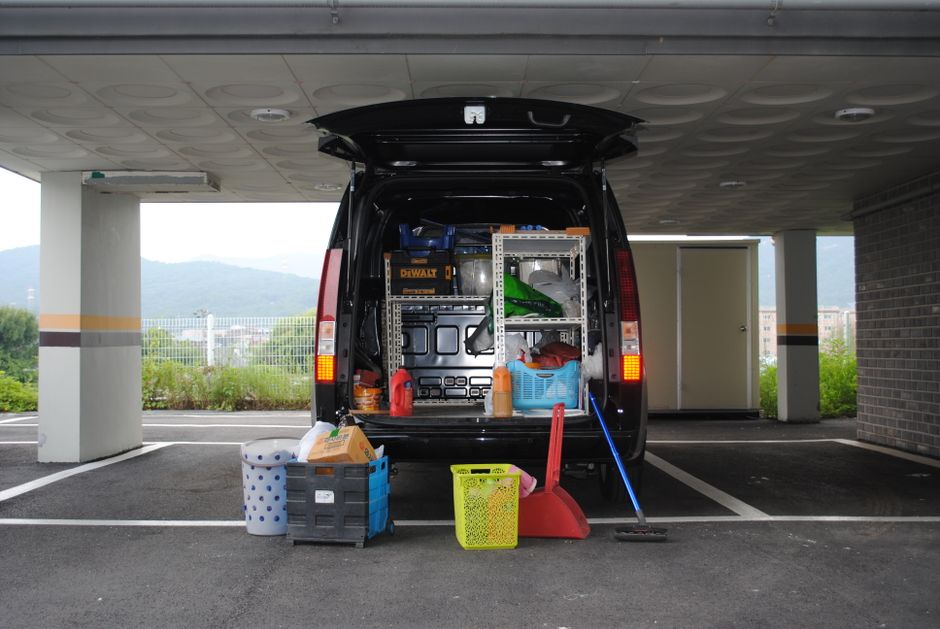
Cleaning vans also need to be set up for the job. That may include:
- segregated storage for waste, chemicals, and clean equipment
- spill kits and basic containment supplies
- secure shelving or restraint points so items do not slide around
- clear labelling for bags, bins, or hazardous materials where relevant
- clean loading space to avoid contamination between jobs
For teams working in Paddington, the van is not just transport. It is a mobile workspace. If you are booking or briefing a provider, it helps to think about the vehicle as part of the service standard, not a separate detail.
And if you want a closer look at how a cleaning provider presents its service standards, about us pages and policy pages can tell you a lot. The better operators are usually the ones that are organised before the van even pulls up.
Key Benefits and Practical Advantages
When permits, route planning, and vehicle setup are handled properly, the benefits are immediate. Less waiting. Less confusion. Fewer complaints. More predictable work. That sounds simple, but in real life it can save an enormous amount of time.
Here are the main practical advantages:
- Faster job completion: staff spend more time cleaning and less time circling for space.
- Better compliance: the business is less likely to run into avoidable parking or waste-handling issues.
- Cleaner site presentation: tidy van loading and controlled waste movement look professional.
- Lower disruption: neighbours, tenants, and building managers experience fewer disturbances.
- Improved safety: organised loading reduces slips, trips, and awkward manual handling.
- Stronger recycling outcomes: sorting waste properly makes it easier to separate recoverable material.
There is another benefit that is easy to overlook: staff morale. Teams work better when the basics are sorted. Nobody likes faffing around with bags, keys, access codes, or van parking at the end of a long shift. A well-run cleaning van setup gives the crew a sense that the day is under control, which, honestly, helps more than people admit.
If your operation includes deep cleans, post-refurbishment work, or larger office resets, the difference becomes even clearer. A process that supports deep cleaning or after builders cleaning can cope with heavier waste volumes without turning the job into a logistics puzzle.
Who This Is For and When It Makes Sense
This topic matters for more people than you might think. It is not only for facilities managers or waste contractors. In Paddington W2, a lot of different businesses and property operators touch this issue.
You should pay attention if you are:
- running an office or shared workspace
- managing serviced accommodation or short-let turnover
- looking after retail, hospitality, or clinic premises
- coordinating cleaning for a managed residential block
- booking one-off clearance after a move, refit, or flood of extra waste
- overseeing a contractor who arrives by van and works on a schedule
It also makes sense if you are a landlord or letting agent trying to avoid complaints. Waste stored badly outside a property can become a sore point very quickly. One untidy morning near the kerb and suddenly there is a neighbour email, a photo, a manager chasing, and an apology nobody wanted to write. That is why services such as end of tenancy cleaning, move-in cleaning, and move-out cleaning often need a more careful waste plan than people expect.
For smaller jobs, the permit question may be light-touch. For larger, repeated, or time-sensitive work, it becomes much more important. If the van is coming daily, or several times a week, you need a repeatable process rather than a hopeful one.
Step-by-Step Guidance
If you are setting this up for the first time, keep it straightforward. Fancy systems are less helpful than a clean, workable routine.
- Map the job type. Identify what waste is being produced, how often, and where it comes from. Office waste is not the same as post-build debris or upholstery offcuts.
- Check access and stopping points. Look at where the van can safely and legally pause for loading. Do this before the job day, not on the day.
- Confirm who handles permits. Is it the building manager, the client, or the cleaning provider? Get that responsibility clear early.
- Set up the van correctly. Separate clean equipment from waste. Secure everything. A van with loose items becomes a problem on London roads, and a noisy one too.
- Brief the team. Staff should know the route, the timing, the access point, and what to do if the space is blocked.
- Label and sort waste. Keep recyclables, general waste, and any specialist waste clearly separated where appropriate.
- Review after the first run. Ask what slowed things down. Was it access? Timing? Building rules? A missing key? Then adjust.
A small real-world example: a team turning up to a commercial unit just after school-run traffic has built up may technically have the right vehicle and the right gear, but still lose twenty minutes because the stopping point was never tested at that hour. That kind of thing happens all the time. A quick dry run saves more time than you might think.
For recurring operations, pair the logistics plan with a service rhythm such as regular cleaning so waste removal and cleaning frequency stay in step instead of drifting apart.
Expert Tips for Better Results
There are a few habits that make a surprisingly big difference. None of them are glamorous, but they work.
- Keep a vehicle checklist in the cab. Not in a drawer somewhere. In the cab, where people can actually use it.
- Use the same loading sequence every time. Consistency reduces mistakes and speeds up end-of-job packing.
- Build a five-minute buffer. In Paddington W2, that buffer can disappear fast, but without it the whole schedule feels brittle.
- Plan for wet weather. London drizzle changes the pace of loading, especially when bags, cloths, and packaging are involved.
- Keep records simple but complete. A job note, permit note, and waste note often solve small disputes before they become awkward.
Another tip: make sure the cleaning van is not also serving as a general storage cupboard. It sounds obvious. Yet many vans slowly become a home for everything from spare mop heads to half-used containers and mystery boxes. Before long, nobody is quite sure what is in there. Not ideal. A clean van works better and feels more trustworthy to clients, too.
If your operation includes specialist interior work, supporting services like carpet cleaning, window cleaning, or office cleaning can all benefit from the same organised vehicle standards.
Common Mistakes to Avoid
Most failures in this area are not dramatic. They are small misses that stack up.
- Assuming access will "sort itself out". It usually doesn't.
- Leaving permits to the last minute. A day lost to admin is still a day lost.
- Mixing clean and dirty equipment. That is a hygiene and reputation issue.
- Forgetting building rules. Some properties have their own delivery windows, loading rules, or quiet hours.
- Ignoring recycling separation. Once mixed, waste becomes harder to manage efficiently.
- Overstuffing the van. It slows unloading and can increase safety risks.
One less obvious mistake is not informing the client what the waste plan is. People relax when they know what is happening. If they see bags moving through a lobby without context, they may assume the worst. A quick explanation helps more than a long apology later. Simple, direct, done.
Tools, Resources and Recommendations
You do not need complex kit to manage this well, but a few basics are worth having.
| Tool or resource | Why it helps | Best use case |
|---|---|---|
| Vehicle checklist | Keeps loading, safety, and access steps consistent | Daily or multi-site cleaning work |
| Permit log | Shows what approval or stopping arrangement was used | Recurring commercial jobs |
| Waste separation bags or bins | Makes sorting simpler and tidier | Commercial waste and recycling runs |
| Spill kit | Helps contain minor accidents quickly | Vans carrying liquids, chemicals, or wet materials |
| Job notes | Records access times, issues, and client instructions | One-off and regular contracts |
As a recommendation, choose providers who are comfortable talking about their operating standards. A good team should be able to explain insurance, access control, vehicle setup, and waste handling without sounding vague. If you are checking credentials, their insurance and safety information and terms and conditions should be clear and practical, not buried under fluff.
If you need pricing clarity as part of the decision, it is sensible to ask for a written estimate through pricing and quotes. That keeps the conversation grounded in the actual job, not guesswork.
Law, Compliance, Standards, or Best Practice
This is one of those areas where the safest answer is also the most honest one: compliance depends on the job, the vehicle, the location, and the type of waste. In the UK, commercial waste handling and vehicle use around restricted streets should always be approached carefully and in line with applicable local rules, building rules, and workplace duties.
In plain English, that means you should:
- use appropriate permits or permissions where stopping or loading requires them
- keep commercial waste properly controlled and traceable
- make sure staff understand safe loading and manual handling
- store cleaning chemicals separately from waste where needed
- follow building management instructions and site-specific requirements
Best practice also includes a strong internal policy on safety and waste reduction. That is why documents such as a health and safety policy or a recycling approach are more than paperwork; they are operational guardrails. If a provider says they manage these things, ask how. The answer should be specific. If it is all very hand-wavey, that is a little red flag.
For businesses working in shared premises, it can also help to look at how broader service arrangements are structured. A team that can handle commercial cleaning and manage larger-scale turnover usually has stronger habits around waste control, scheduling, and access coordination. Not always, but often enough to be useful.
Options, Methods, or Comparison Table
There is more than one way to organise cleaning-vans and waste movement in Paddington W2. The right choice depends on how often you need access, how much waste you generate, and how tight the site is.
| Approach | What it works best for | Strengths | Drawbacks |
|---|---|---|---|
| Single-visit van access with a planned loading window | One-off or low-frequency jobs | Simple, efficient, low admin | Less flexible if access changes |
| Recurring scheduled access | Regular commercial cleaning or managed buildings | Predictable and easier to plan around | Needs discipline and good coordination |
| Building-managed loading or service access | Sites with tight control or limited street space | Safer, more orderly, less street disruption | Can depend on building staff availability |
| Mobile multi-stop van routing | Teams covering several properties in one day | Efficient for area-based scheduling | Higher risk of timing slippage |
For a lot of Paddington work, the second option is the sweet spot. Recurring access with clear rules often beats a heroic last-minute scramble. Heroics look good in stories, but not at a loading bay at 7:45 in the morning.
Case Study or Real-World Example
Picture a small office near Paddington with a weekly clean and a monthly deeper reset. At first, the team arrives with a van full of supplies, but waste collection is handled separately and nobody has clearly mapped the loading point. The result? The cleaners are ready, the office manager is waiting, and the van is parked a bit too far away to be useful. Small delays turn into a half-hour drag.
After the first few visits, the process is tightened up. The team agrees a specific arrival window, confirms where the van can stop, sorts waste before loading, and keeps a short note of any access issues. A bin that once caused a grumble now disappears with minimal fuss. That changed the feel of the job more than anyone expected.
The interesting bit is that the cleaning itself did not change much. The difference was operational confidence. The client felt more relaxed, the team moved faster, and the schedule became easier to defend. Sometimes the best service upgrade is simply making the boring parts less chaotic.
This is also where services such as one-off cleaning or deep cleaning become easier to deliver well, because the access and waste side has already been thought through.
Practical Checklist
Use this checklist before the first visit or before you scale up a recurring contract.
- Confirm the type and volume of commercial waste being produced.
- Identify the exact van access point or loading area.
- Check whether any permit, booking, or building approval is needed.
- Assign responsibility for getting access permission.
- Make sure waste is separated from clean equipment in the van.
- Prepare spill materials, gloves, and basic safety supplies.
- Review manual handling steps with the team.
- Agree an arrival window that works for the building and the street.
- Keep a simple job note for any issues or delays.
- Review the process after the first run and tweak it if needed.
Quick takeaway: if the permit, parking, and loading plan are sorted, everything else becomes easier. If they are not, even a neat cleaning job can feel unnecessarily hard. That is the whole game, really.
Get a free quote today and see how much you can save.
Conclusion
Commercial waste permits and cleaning vans in Paddington W2 may sound like a niche operational detail, but it sits at the centre of smooth, professional cleaning delivery. When the access plan is clear, the van is set up properly, and waste is handled with care, the entire service feels calmer, quicker, and more credible. That matters whether you are managing an office, a block, a shop, or a busy short-let turnaround.
The simplest rule is a good one: plan the movement as carefully as the clean itself. Do that, and you avoid most of the avoidable headaches. To be fair, that is half of professional cleaning anyway - the other half is doing the actual work without everyone noticing the effort behind it.
If you want a service partner that understands the practical side as well as the visible finish, start with a conversation and make sure the operational details are as solid as the cleaning result. That is the kind of foundation that lasts.
Frequently Asked Questions
What are commercial waste permits in Paddington W2 used for?
They are used to allow lawful access, stopping, loading, or waste movement where local restrictions, building rules, or site controls apply. The exact need depends on the job and location.
Do cleaning vans always need a permit in Paddington W2?
Not always. It depends on where the van needs to stop, how long it needs to stay, and whether the area is restricted or managed by a building or parking authority.
Who is usually responsible for arranging access or permits?
That depends on the contract. It might be the client, building manager, or cleaning provider. The important thing is to make responsibility clear before the job starts.
Why does van setup matter so much for cleaning work?
A properly set up van keeps waste separate from clean equipment, reduces safety risks, and speeds up loading and unloading. It also gives clients a more professional impression.
How can I tell if a cleaning provider handles waste properly?
Ask how they separate waste, manage loading, store chemicals, and document the work. A reliable provider should explain their process clearly and without dodging the question.
Is this only relevant for large commercial contracts?
No. Even smaller jobs can be affected by parking access, waste storage, and loading rules. Larger contracts just make the issues more visible.
What is the biggest mistake businesses make?
Assuming access will be easy on the day. In Paddington W2, that can lead to delays, extra stress, and avoidable disruption.
Can commercial waste and cleaning equipment travel in the same van?
Yes, but they should be stored carefully and separately where possible. Clean equipment should not be contaminated by waste, leaks, or loose debris.
How often should a waste and van access plan be reviewed?
Review it after the first visit, after any site change, and whenever the job volume or schedule changes. Small adjustments can make a big difference.
What services are most likely to need better waste planning?
Services like office cleaning, after builders cleaning, and end of tenancy cleaning often generate more waste or need tighter timing, so the logistics matter more.
How does recycling fit into commercial cleaning logistics?
Recycling works best when sorting happens early and consistently. That makes collection easier, improves site tidiness, and supports a more responsible cleaning routine.
Where can I check service standards before booking?
Look at the provider's policy pages, service pages, and pricing information. Useful starting points include health and safety policy, recycling and sustainability, and pricing and quotes.