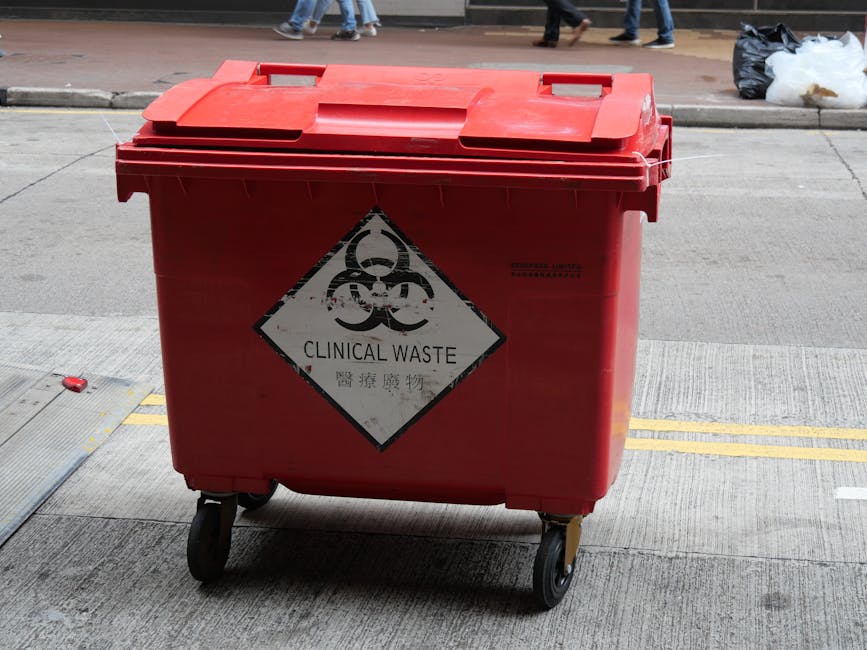
Westminster Council rules on hazardous waste disposal: a practical guide for households, landlords, and businesses
If you have ever stood in front of a half-full paint tin, an old battery, or a leaking cleaning product and thought, "Right... where on earth does this go?", you are not alone. Westminster Council rules on hazardous waste disposal can feel a bit fussy at first, but there is a good reason for that. Hazardous waste can harm people, damage collection vehicles, and contaminate regular recycling if it is handled badly. The good news? Once you understand the basics, disposal becomes much simpler, and a lot less stressful.
This guide breaks down what hazardous waste is, how disposal generally works in Westminster, what mistakes people make, and how to stay on the right side of safety and compliance. It is written for real-life situations: end-of-tenancy clear-outs, office spring cleans, building work, or simply a cupboard full of "I'll deal with this later" items. Let's deal with it properly.
Table of Contents
- Why Westminster Council rules on hazardous waste disposal Matters
- How Westminster Council rules on hazardous waste disposal Works
- Key Benefits and Practical Advantages
- Who This Is For and When It Makes Sense
- Step-by-Step Guidance
- Expert Tips for Better Results
- Common Mistakes to Avoid
- Tools, Resources and Recommendations
- Law, Compliance, Standards, or Best Practice
- Options, Methods, or Comparison Table
- Case Study or Real-World Example
- Practical Checklist
- Conclusion
- Frequently Asked Questions
Why Westminster Council rules on hazardous waste disposal Matters
Hazardous waste is not just "messy rubbish". It includes materials that can catch fire, corrode, poison, irritate skin, or release harmful fumes. In a dense area like Westminster, where residential buildings, communal bins, trade waste, and busy streets all overlap, bad disposal creates a ripple effect quickly. One incorrectly tossed container can affect bin crews, cleaners, neighbours, and sometimes an entire waste stream.
There is also the practical side. If you ignore the rules, you can end up with rejected collections, extra charges, complaints from landlords or managing agents, or the kind of last-minute panic that always seems to happen on a Friday afternoon. To be fair, hazardous waste is one of those things people only think about when it has already become a problem.
For homes, the main risk is safety. For businesses, the risk widens into compliance, storage, duty of care, and documentation. That is why many people book a deep cleaning or one-off cleaning service after a move, renovation, or tenant change, then realise the real issue is not the dust - it is the leftover chemicals, aerosols, or broken fluorescent tubes tucked away in a cupboard.
Expert summary: The safest approach is simple: identify hazardous items early, keep them separate, avoid mixing materials, and use the correct disposal route before they become a storage problem.
How Westminster Council rules on hazardous waste disposal Works
Westminster Council rules on hazardous waste disposal generally follow a sensible principle: keep hazardous materials out of normal household waste and regular recycling unless the council specifically says otherwise. In practice, that means identifying what the item is, checking how it should be packaged, and using the right collection or drop-off method.
Most hazardous waste falls into one of a few broad categories:
- Household chemicals such as bleach, drain cleaner, paint stripper, and solvent-based products.
- Batteries and electrical items that may contain corrosive or toxic components.
- Paints, adhesives, and varnishes, especially if they are liquid or still usable.
- Aerosols and pressurised containers that can explode if crushed or heated.
- Sharps and contaminated materials, which need special handling.
- Garden and DIY leftovers such as pesticides, fuel, or certain building products.
The rules are not usually about making life difficult. They are about keeping the waste stream safe and predictable. A collection crew cannot know whether an unlabelled bottle contains water, paint thinner, or something much nastier. In the real world, that uncertainty is exactly what causes accidents.
If you are dealing with waste after a renovation, it often helps to pair proper disposal with after builders cleaning, because the dust, fragments, and leftover materials tend to appear together. That combination is common, and a bit annoying, but manageable if you sort it early.
What usually happens in practice
Although specific council arrangements can change, the usual process is straightforward:
- Separate hazardous items from general refuse and mixed recycling.
- Keep products in original containers wherever possible.
- Do not decant chemicals into drink bottles or food containers.
- Store items upright and in a dry, ventilated place until disposal.
- Follow the council's current guidance for collections, household facilities, or approved disposal points.
One small but important point: if the item is only partly used, it still counts as hazardous if the product itself is hazardous. Half a tin of paint is still paint. A nearly empty bottle of oven cleaner is still cleaner. No shortcuts there.
Key Benefits and Practical Advantages
Following Westminster Council rules on hazardous waste disposal brings a few very concrete benefits, and not just the obvious "staying legal" one.
- Safer homes and workplaces. Fewer fumes, spills, and accidental exposures.
- Cleaner waste streams. Recycling and general waste stay less contaminated.
- Fewer collection issues. You reduce the chance of rejected or delayed bins.
- Better compliance for landlords and businesses. This matters especially during move-outs and office clearances.
- Less stress during property handovers. Handy for end of tenancy cleaning or move-out cleaning, where you are trying to leave a place spotless, not full of forgotten chemicals in the cupboard under the sink.
There is another benefit people often miss: better organisation. When you sort hazardous items properly, the rest of the clean-out becomes easier. The non-hazardous clutter goes one way, reusable items another, and the risky bits no longer sit in the middle making everything harder. Simple, really. Well, simpler.
For commercial sites, good disposal habits also support a more professional working environment. That aligns neatly with commercial cleaning routines, especially in offices, communal areas, or managed buildings where multiple people share responsibility for waste.
Who This Is For and When It Makes Sense
This topic matters to more people than you might think. Hazardous waste disposal is not only for factories or laboratories. In Westminster, it can affect:
- Homeowners and tenants clearing cupboards, garages, or sheds.
- Landlords and letting agents dealing with left-behind materials after a tenancy.
- Office managers removing old cleaning products, batteries, printer consumables, and small electrical waste.
- Hospitality operators and short-let hosts, especially when booking Airbnb cleaning after guests leave behind awkward items.
- Building contractors and decorators handling leftover tins, solvents, sealants, and debris.
- Facilities teams responsible for communal bins and shared storage areas.
It makes sense to think about hazardous waste disposal whenever you are doing a bigger tidy-up rather than dealing with one item at a time. Spring cleaning. Before a sale. After refurbishment. During a move. Even after a deep kitchen clean, when a cupboard suddenly reveals three mystery sprays, two old batteries, and one oddly sticky container that nobody wants to touch.
If you are already arranging move-in cleaning or regular cleaning, it is worth checking any leftover products before they are just shoved to the back of a shelf again. That "out of sight" habit is a classic one.
Step-by-Step Guidance
Here is a practical way to approach hazardous waste without overcomplicating it.
1. Identify what you have
Start by grouping items into broad types: liquids, aerosols, batteries, sharps, electrical items, and any product with warning symbols. If the label is damaged, treat it cautiously. When in doubt, assume it is hazardous until you are sure otherwise.
2. Separate hazardous from non-hazardous waste
Keep hazardous items away from normal rubbish, food waste, mixed recycling, and any clean materials you plan to donate or reuse. Do not put batteries loose in a bin bag with metal items. That is a recipe for trouble, and not the exciting kind.
3. Keep original packaging where possible
Original containers usually contain useful information such as product name, hazard warnings, and contents. If the container is damaged, do not transfer the material into an unlabelled bottle unless a specialist disposal route instructs you to do so. Most of the time, the safest option is to leave it in place and handle it with care.
4. Check the item's condition
Ask yourself whether the waste is leaking, pressurised, broken, heat-sensitive, or sharp. A cracked bleach bottle needs more urgent attention than a sealed tin of paint. A smashed fluorescent tube is different again. The condition of the item affects how you store it and how quickly you should move it on.
5. Store it safely until disposal
Hazardous waste should be kept in a cool, dry, well-ventilated place, away from children, pets, and anything that can spark or catch fire. If a container is upright and stable, that already removes a lot of risk. A surprising number of incidents happen because someone knocked over a bottle while trying to stack "just one more bag".
6. Use the correct disposal route
Follow the current Westminster Council guidance for household hazardous waste, special collections, or approved disposal arrangements. For business waste, use a compliant waste contractor and keep the records you need. Businesses have more responsibility here, and that is not something to guess at.
7. Confirm what happened to the waste
If you are a business, ask for waste transfer paperwork and keep your records safely. If you are a resident, make sure you have actually used the intended disposal route and not just moved the problem from one corner of the flat to another. That does happen. More often than people admit.
Expert Tips for Better Results
These are the little habits that make hazardous waste management easier in real life.
- Create a small "do not bin" box. Put batteries, bulbs, old medicines, and suspect containers in one clearly labelled place.
- Sort as you clean. If you are doing domestic cleaning or a serious declutter, handle hazardous items as you find them rather than leaving them for a later round.
- Keep product labels readable. A quick photo on your phone can help if the label wears off later.
- Use gloves for unknown items. Not glamorous, but sensible. You do not need a film-budget hazmat suit for a bottle of old cleaner, just basic caution.
- Never mix chemicals. Especially not drain cleaners, bleach, ammonia, or solvents. Mixed chemicals can create fumes very quickly.
- Watch communal areas closely. In blocks and shared buildings, items can get left near bins. Communal area cleaning can help keep those spaces tidy, but people still need to dispose of hazardous waste properly.
One practical observation from experience: the items people forget most are batteries, aerosols, small paint containers, and old cleaning products. They are small enough to hide in a cupboard, but not harmless enough to ignore. Bit of a nuisance, yes. Still worth dealing with.
Common Mistakes to Avoid
Most hazardous waste problems come from a handful of repeat mistakes. Once you know them, they are easier to avoid.
- Putting hazardous waste in general rubbish. This is the big one.
- Mixing different chemicals together. Dangerous and unnecessary.
- Decanting into food or drink containers. This creates serious confusion and risk.
- Leaving containers open or unsealed. Fumes and leaks spread faster than people expect.
- Ignoring broken bulbs or tubes. These need careful handling.
- Assuming "nearly empty" means safe. Residue still matters.
- Waiting until the last minute. That is how people end up rushing and making poor choices.
Another common one is forgetting that some "ordinary" household items can still be hazardous if damaged or contaminated. A cleaner bottle under a sink is one thing; the same bottle, split and leaking across a floor, is a different problem entirely. If that sounds obvious, fair enough. In practice, it still catches people out.
Tools, Resources and Recommendations
You do not need a huge toolkit to manage hazardous waste well. A few simple items go a long way:
- Thick gloves for handling unknown containers safely.
- Seal-able plastic tubs or boxes to keep items upright and contained.
- Marker pens and sticky labels for temporary identification.
- Small torch for checking cupboard corners, under sinks, and loft spaces.
- Basic first-aid awareness for accidental contact or splashes.
For property owners and managers, it also helps to keep a simple inventory of recurring hazardous items. That might sound a bit over the top, but for offices, letting properties, or multi-unit buildings, it saves time. If you know you regularly have batteries, aerosols, and kitchen chemicals to sort, you can make the process routine rather than reactive.
If your property is due for office cleaning or window cleaning, it is a good moment to check storage cupboards, maintenance shelves, and under-sink areas too. Cleaning jobs and waste checks often overlap more than people realise.
Law, Compliance, Standards, or Best Practice
With hazardous waste, the safest position is to treat local council guidance and wider UK waste duties seriously, especially for businesses. You should not assume that what is fine for one property is fine for another, and you should not rely on habit if the product or the disposal route is unclear.
For households, the main concern is following Westminster Council's current advice on what can be accepted, where it should go, and how it must be prepared. For businesses, there is usually a stronger duty to store waste correctly, use a compliant carrier, and keep appropriate paperwork. That may include waste transfer notes or equivalent records depending on the waste type and the service used.
Best practice is to:
- store hazardous waste securely and separately,
- prevent spills, leaks, and cross-contamination,
- use trained or suitable providers for collection and removal,
- keep written evidence where required,
- train staff or household members on basic segregation,
- review disposal arrangements after renovations, tenancy changes, or seasonal clear-outs.
For cleaning companies, landlords, and commercial operators, this sits naturally alongside health and safety policies and insurance considerations. A sensible approach often includes checking health and safety guidance and understanding the limits of what a standard cleaner should remove versus what requires specialist disposal. That line matters. A lot.
Options, Methods, or Comparison Table
There is more than one way to deal with hazardous waste, and the best option depends on the quantity, type, and urgency.
| Method | Best for | Pros | Watch-outs |
|---|---|---|---|
| Separate home storage until disposal | Small, sealed household items | Convenient, low cost, easy to organise | Only safe if stored carefully and not for too long |
| Council collection or approved household route | Resident waste that qualifies under local rules | Simple and usually the most direct option | Availability, item limits, and preparation rules can vary |
| Commercial waste contractor | Businesses, managed buildings, larger volumes | Better for regular compliance and record-keeping | Costs can be higher and paperwork matters |
| Project-based clear-out with cleaning support | Moves, refurbishments, tenancy handovers | Helps sort waste alongside the clean, saves time | Needs clear communication about what is and isn't included |
If you are comparing options for a move or a tenancy change, it can be useful to combine waste sorting with move-in cleaning or end of tenancy cleaning. That way the property is cleaned and the awkward bits are dealt with in one organised pass, rather than in three frantic ones.
Case Study or Real-World Example
Picture a Westminster flat at the end of a tenancy. The rooms look tidy enough at first glance, but then you open the kitchen cupboard. There is half a tin of gloss paint, two aerosol air fresheners, a bottle of drain opener, old batteries in a mug, and a broken bulb wrapped in a tea towel. Nothing dramatic. Just one of those "we'll sort it later" collections.
The sensible move is to stop treating it as random clutter and start treating it as waste with different rules. The batteries go into one container, the liquid chemicals stay upright and separate, the bulb is handled carefully, and anything leaking is isolated. The non-hazardous items are cleared out with the rest of the tenancy clean. The hazardous items then follow the correct disposal route rather than disappearing into the general bin and causing trouble for the next person.
What makes this example realistic is not the mess itself, but the timing. These discoveries often happen when you are already tired, already behind schedule, and already staring at a checklist that is too long. That is why a calm, step-by-step method helps. It reduces the "I just want this done" temptation.
Practical Checklist
Use this as a quick final check before disposing of hazardous waste.
- Have I identified every item that may be hazardous?
- Have I kept hazardous items separate from normal rubbish and recycling?
- Are containers sealed, upright, and clearly labelled?
- Have I avoided mixing different chemicals?
- Have I stored items safely away from heat, children, and pets?
- Do I know which disposal route applies in Westminster?
- If this is business waste, do I have the right records and contractor details?
- Have I checked for broken bulbs, leaking containers, or damaged packaging?
- Have I removed any non-hazardous items from the same area so I am not carrying extra clutter forward?
- Have I done one last look under sinks, in cupboards, and in utility areas?
If you are cleaning a property for the first time in a while, that last point matters more than people think. The hidden spots are where the awkward stuff sits.
For anything more than a simple cupboard sort-out, pairing disposal with house cleaning or oven cleaning can help you finish the job properly, because the waste and the grime often travel together. Not glamorous, but true.
Conclusion
Westminster Council rules on hazardous waste disposal are really about keeping people safe, preventing contamination, and making sure waste is handled in the right place, the right way. Once you know what counts as hazardous and how to separate it, the process becomes much less intimidating. You do not need to be perfect; you just need to be careful, consistent, and willing to stop guessing.
For households, that usually means sorting items early and using the right local route. For landlords, agents, and businesses, it means being more structured, keeping records where required, and not leaving dangerous materials buried in a cupboard until the next crisis. A bit of organisation now saves a lot of irritation later. And probably a few awkward conversations too.
If you are dealing with a move, a rental handover, or a larger clear-out, it is often the right moment to combine proper waste sorting with a full clean so everything is handled in one go. That is the tidy, sensible version of events. It is also the calmer one.
Get a free quote today and see how much you can save.
Take it one item at a time, keep the risky stuff separate, and the whole job becomes far more manageable. A small bit of care goes a long way.
Frequently Asked Questions
What counts as hazardous waste in a Westminster home?
Typical household hazardous waste includes batteries, paints, solvents, cleaning chemicals, aerosols, fluorescent bulbs, some electrical items, and products with warning labels. If you are unsure, treat it cautiously rather than putting it in general rubbish.
Can I put old paint in the normal bin?
Usually no. Paint is often treated as hazardous or at least as a special waste item if it is liquid, solvent-based, or otherwise unsuitable for ordinary disposal. Check the current council guidance before putting it out.
What should I do with leaking cleaning products?
Keep them upright if you can do so safely, isolate them from other waste, wear gloves, and avoid mixing them with anything else. If the leak is significant, use a secondary container and arrange the correct disposal route as soon as possible.
Are batteries hazardous waste?
Yes, batteries need careful disposal because they can leak, overheat, or cause fires if crushed or mixed with other waste. Never throw loose batteries into a general bag where they might contact metal objects.
Do businesses in Westminster have different rules from households?
In practice, yes. Businesses usually have stronger obligations around storage, carrier selection, documentation, and safe handling. Household disposal tends to be simpler, but you still need to follow the council's current rules.
Can a cleaner take away hazardous waste during a standard cleaning visit?
Not always. It depends on the item, the service, and what has been agreed in advance. Standard cleaning is generally about cleaning surfaces and removing ordinary waste, not acting as a specialist hazardous waste carrier.
What if I find old chemicals during an end-of-tenancy clean?
Separate them immediately from general waste, keep them sealed if safe to do so, and follow the correct disposal route. This is one of the most common "oh, that's still here" moments in a property handover.
Is it safe to pour leftover chemicals down the sink?
Usually not. Pouring chemicals down sinks can create safety risks, damage pipes, and cause pollution. Only do so if a product label or official disposal guidance clearly says it is acceptable.
How do I store hazardous waste before disposal?
Store it in a cool, dry, ventilated place, away from heat sources, children, and pets. Keep containers upright, sealed, and clearly labelled. If something is damaged or unstable, move it more carefully or seek help.
What is the biggest mistake people make with hazardous waste?
The biggest mistake is treating it like ordinary rubbish. Mixing hazardous and non-hazardous waste creates avoidable danger, and it often leads to extra mess, extra cost, or a rejected collection later on.
When should I ask for professional help?
If you have a lot of hazardous waste, if the items are leaking or broken, if you are dealing with commercial waste, or if the disposal route is unclear, it is wise to ask for professional advice rather than guessing.
Does hazardous waste disposal matter during routine cleaning?
Yes, especially in kitchens, utility rooms, bathrooms, and storage cupboards. Routine cleaning is a good time to spot old products before they pile up. A small check now saves a bigger job later, honestly.